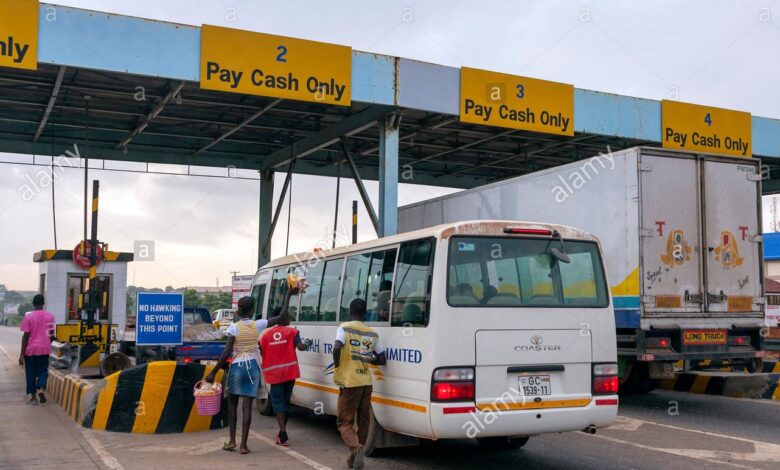

Residents of Keta Municipality, Volta Region, welcomed the government’s long-overdue proposal to reintroduce toll booths on major roads to address deteriorating highways affecting commercial and private motorists.
They stressed that this initiative would represent the daily road users who bear the brunt of poor infrastructure.
Mr. Kwabla Alfred Gavor, a resident of Keta, told the Ghana News Agency that public endorsement is expected to reduce resistance and facilitate smoother implementation once Parliament approves the policy.
“One major importance of reintroducing toll booths is the direct generation of revenue specifically earmarked for road construction and routine maintenance,” he said.
Unlike general tax funds, often diverted to other sectors, toll collections create a dedicated stream guaranteeing consistent funding for fixing potholes, resurfacing damaged stretches, and expanding key routes to ease movement.
Mr. Gavor added that toll booths would enhance road safety standards. Revenue could fund modern road signs, streetlights, speed cameras, and crash barriers, directly reducing the high incidence of accidents that have become common since the previous administration scrapped the system.
“Toll booths promote the principle of user-pay, ensuring that those who benefit most contribute fairly toward upkeep. This is why we must all embrace the initiative to generate more revenue,” he explained.
Commercial bus driver Mr. George Awudu said the initiative would discourage overuse by non-essential traffic and encourage motorists to value and preserve infrastructure, fostering a culture of collective responsibility. He noted that the reintroduction of tolls would create direct and indirect employment opportunities for youths, including booth operators, security personnel, and technicians maintaining electronic systems. Ancillary businesses, such as nearby eateries and repair workshops, would also benefit from the renewed activity.
He emphasized that since the removal of toll booths by the previous Nana Addo government, road surfaces have rapidly deteriorated. Without dedicated toll revenue, routine maintenance
was neglected, leading to widespread potholes and erosion that have turned once-smooth highways into hazardous stretches, especially during the rainy season.
He further noted a sharp rise in road traffic accidents, as poor road conditions force drivers to swerve or brake abruptly, resulting in multiple crashes and injuries, placing additional strain on hospitals and emergency services.
Mr. Awudu also highlighted rising maintenance costs for drivers and transport companies. Frequent tyre punctures, suspension damage, and engine wear caused by bad roads have increased operational expenses, forcing many commercial drivers to raise fares, ultimately burdening ordinary passengers and businesses reliant on road transport.
Residents added that, with toll revenue gone, the national budget has borne the entire cost of road repairs, causing delays in other development projects and occasional emergency allocations that cannot keep pace with damage across the Volta corridor.
To ensure efficient toll operations, residents called for modern electronic toll collection systems, including contactless smart cards and mobile money platforms, to minimize human error, reduce queues, and guarantee faster, transparent transactions.
Well-trained and motivated toll operators are less likely to engage in corrupt practices, while digital surveillance and random audits guarantee accountability and high service standards.
They urged the government to establish a joint stakeholder oversight committee including drivers’ unions, local chiefs, and transport ministry officials to provide continuous feedback and resolve grievances promptly. They also recommended quarterly public reports on toll revenue usage to sustain community support and trust, ensuring the system operates efficiently for years to come.
GNA